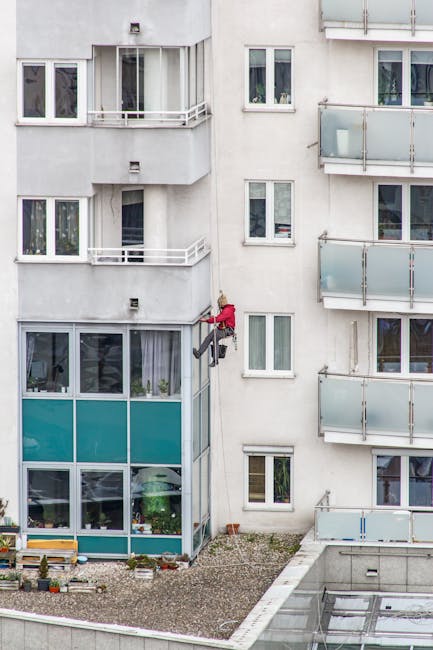
Common access problems for Kennington high rise cleaning
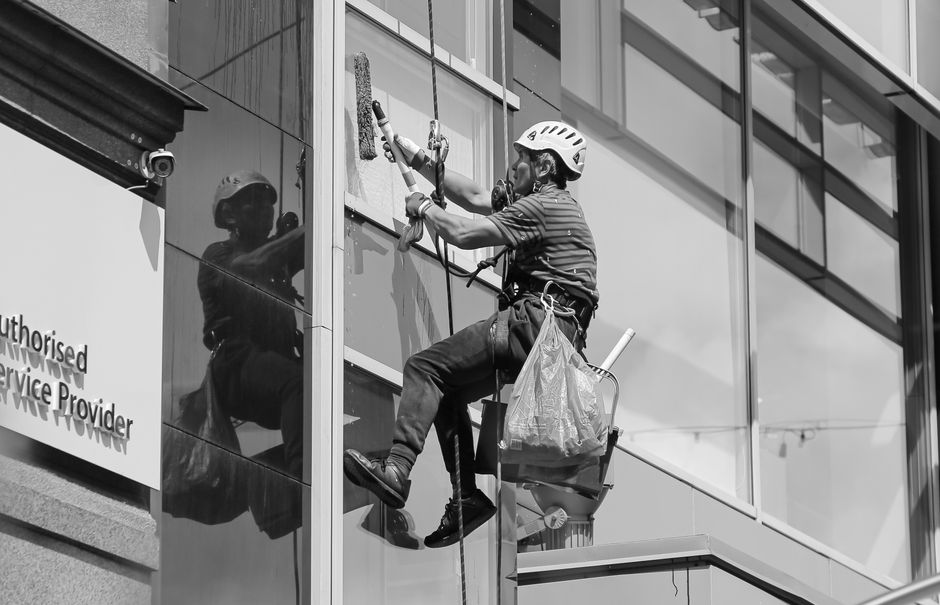
High-rise cleaning sounds straightforward until you get to the building and the real world shows up: locked doors, missing keys, awkward parking, slow lifts, and a resident who swears the concierge left 20 minutes ago. Common access problems for Kennington high rise cleaning can derail even a well-planned job, and they usually do it at the worst possible moment. If you manage a block, arrange cleaning for your flat, or run a cleaning schedule for a tall building, knowing the access risks early saves time, money, and a fair bit of stress.
This guide breaks down the most common access issues, why they matter, how professional teams work around them, and what you can do before the cleaners arrive. It is practical, plain-English advice, with enough detail to help you plan properly rather than guess and hope for the best. Let's face it, in a high-rise, access is half the job.
Why Common access problems for Kennington high rise cleaning Matters
Access is not just an admin detail. It affects whether a cleaning team can start on time, work safely, and finish the job to a proper standard. In a high-rise environment, the building itself becomes part of the task: lifts, controlled entry, service corridors, loading points, concierge handovers, and resident-only areas all need to line up.
When access is poor, a few things tend to happen. The team waits around. Work gets rushed. Some areas are missed because there is no practical route to them. Or the cleaner has to return another day, which is frustrating for everyone. For larger buildings, that can also disrupt neighbours, building management, and other contractors using the same space.
In Kennington, where you get a mix of apartment blocks, managed estates, older conversions, and busy roadside access, the details matter. A building might look easy from the outside but still be awkward to service once you factor in entry controls or limited loading space. That is why experienced teams usually treat access planning as part of the cleaning quote, not something to sort out on the doorstep.
Key takeaway: most high-rise cleaning delays are not caused by the cleaning itself. They are caused by poor coordination before anyone picks up a cloth, mop, or vacuum.
How Common access problems for Kennington high rise cleaning Works
Good access planning starts before the appointment. A cleaning company will normally ask how the building is entered, who provides the keys or fobs, whether a concierge or porter is on site, and whether parking or unloading is possible nearby. That information shapes the route, timing, equipment choice, and the number of operatives needed.
For example, if a lift is too small for larger cleaning equipment, the team may need more compact tools. If service access is restricted during rush hour, the visit may need to begin earlier. If the windows or facade are part of the job, the method changes again. The access route affects the cleaning method. Simple as that.
Most access problems fall into a few broad categories:
- Entry access - keys, codes, intercoms, fobs, concierge sign-in, or authorised contact not being ready.
- Vertical access - lift faults, lift restrictions, stair-only access, or lifts booked for other users.
- Work-area access - locked flats, restricted balconies, plant rooms, roof spaces, or service cupboards.
- Vehicle access - no loading bay, permit issues, narrow roads, or poor stopping space.
- Timing access - limited cleaning windows, busy resident traffic, or building rules that only allow work at certain times.
To be fair, a lot of access issues are predictable. If a block needs advance notice for security, or a concierge only works certain hours, that is not really a surprise. The trouble starts when those details are left until the day itself.
If the job is part of a wider property clean, you may also want to look at services like deep cleaning, window cleaning, or facade cleaning, because access planning becomes even more important when the work moves beyond a single room.
Key Benefits and Practical Advantages
Sorting access problems early has benefits that go beyond convenience. It improves the job quality, protects the building, and makes the whole process calmer. Nobody enjoys a start time that turns into a half-hour search for the right entrance, especially when a team is carrying equipment and the clock is ticking.
- More efficient cleaning - the team spends less time waiting and more time cleaning.
- Better safety - fewer rushed decisions in hallways, stairwells, and lift lobbies.
- Lower disruption - residents, tenants, and building staff are interrupted less often.
- More accurate pricing - access issues can affect labour time, so early clarity helps quotes stay realistic.
- Fewer reschedules - especially useful for move-outs, handovers, and planned maintenance windows.
- Cleaner results - when the team can reach everything properly, nothing gets left because it was awkward to access.
There is also a trust benefit. A well-organised access process tells the customer, the building manager, and any residents that the work is being handled professionally. That matters in high-rise settings, where one missed instruction can ripple through the entire building.
If you are comparing providers, it can help to understand how a cleaning company handles planning, risk, and communication before the visit even begins.
Who This Is For and When It Makes Sense
This topic matters to a fairly wide group of people, and not just to facilities teams. In practice, it affects anyone arranging work in a tall residential or mixed-use building.
- Residents and leaseholders who need flat, balcony, or communal-area cleaning.
- Letting agents and landlords coordinating end-of-tenancy or pre-sale cleaning.
- Building managers and concierge teams handling contractor sign-in and lift use.
- Office managers arranging cleaning in multi-storey commercial properties.
- Cleaning teams who need to know what equipment can realistically be used on site.
It makes the most sense to think about access early if the job includes shared corridors, top-floor flats, restricted parking, or timed entry. It also matters if the task is sensitive, like after building works, where dust control, lift protection, and safe movement through the property are all part of the picture. In those cases, after builders cleaning often needs tighter access coordination than a standard clean.
And honestly, if the building has a history of mixed messaging - one person says use the side door, another says only the main entrance - then you already know it is worth over-communicating. A lot.
Step-by-Step Guidance
Here is a practical way to manage access for high-rise cleaning without turning it into a daily puzzle.
- Confirm the building type and entry route. Ask whether access is via reception, a side gate, a coded door, or a fob system. Do not assume the obvious route is the one that will actually be open.
- Identify who is authorising entry. It may be the resident, the concierge, the landlord, the office manager, or the building manager. One named contact is better than three people vaguely "on hand".
- Check lift and stair access. If the lift is out of service, too small, or restricted for contractor use, say so before arrival.
- Plan parking and unloading. For central London jobs, even a short unloading stop can be tricky. If a van cannot stop close enough, extra carrying time needs to be built in.
- List any restricted areas. Roof access, plant rooms, balconies, and plant corridors may need separate permission or keys.
- Confirm the cleaning window. Some buildings only allow work during set hours to limit noise or resident disruption.
- Share special instructions in writing. Written notes are boring, yes, but they stop misunderstandings. A quick message is often enough.
- Do a final pre-arrival check. On the morning of the job, confirm the contact person is reachable and the access point is ready.
If the cleaning is for a home rather than a managed block, the same logic still applies. It may be a domestic job, but lifts, entry codes, and parking rules can still be the thing that makes or breaks the day. Services like domestic cleaning and home cleaners often benefit from the same pre-check routine.
A small but useful habit: send one message that covers everything. Building entrance, contact name, floor number, parking, lift access, and any restrictions. One tidy note beats six scattered texts. Every time.
Expert Tips for Better Results
From an operations point of view, the best access plans are the ones that remove guesswork. Here are the habits that usually make the biggest difference.
- Use one clear access contact. Too many contacts create delays. Pick one person to hold the keys, codes, or decision-making.
- Allow a buffer for building delays. Lift waits, concierge handovers, and resident traffic can add real time to the visit.
- Think about equipment size. Big machines are great until they cannot fit through the service lift. Then they are just awkward lumps.
- Protect common areas. Floor protection, corner guards, and careful route planning reduce the risk of scuffs and complaints.
- Keep a backup plan. If a lift fails or a door code changes, know who can be contacted immediately.
- Match the method to the access conditions. For example, steam or extraction systems may be brilliant in one setting and completely impractical in another.
Another useful tip is to separate "can enter the building" from "can complete the job properly". Those are not always the same thing. You might get in, but if you cannot move equipment safely or access all required areas, the cleaning result will suffer.
For larger properties, pairing access planning with the right specialist service helps. For instance, communal hard surfaces may need hard floor cleaning, while common-area carpets are better handled through carpet cleaning or related services depending on the material and condition.
Common Mistakes to Avoid
A lot of access trouble comes from small oversights. Nothing dramatic. Just the kind of details people assume someone else has already handled.
- Assuming the concierge will be available. Front-of-house cover changes. Always confirm.
- Not checking lift restrictions. Some lifts cannot take certain equipment, and some blocks limit contractor use at peak times.
- Leaving parking to chance. In Kennington, especially near busier roads, that is asking for trouble.
- Forgetting top-floor and roof access. These are often the areas that need the most planning.
- Giving vague instructions. "Use the usual entrance" is not enough if there are two usual entrances.
- Booking the right cleaning service but the wrong schedule. A great service, badly timed, still creates a bad experience.
The biggest mistake, though, is probably the simplest one: not telling the cleaners what might go wrong. If access is uncertain, say so. A decent team would rather hear "the code may change after 2pm" than arrive and discover it at the door. No one enjoys a locked-door mystery at 8:00 in the morning.
For move-out jobs, access confusion can also slow down related work like end of tenancy cleaning, where timing with agents and key return often matters just as much as the clean itself.
Tools, Resources and Recommendations
You do not need fancy software to manage access well, but a few simple tools help enormously. The best ones are often the boring ones, which is probably why they work.
- Access checklist - a short written list of entry points, codes, contacts, and backup contact details.
- Photo references - useful if the building has multiple entrances or a confusing service route.
- Booking notes - a shared notes field that records lift instructions, parking, and restricted hours.
- Risk-aware planning - especially for tall buildings, where moving equipment safely matters as much as speed.
- Clear quotation notes - a transparent estimate should reflect any access difficulty, extra carrying, or timed entry.
If you are asking for a quote, it helps to describe the access situation honestly. That may include whether there is no lift, whether the parking is permit-controlled, or whether the building only allows work after school drop-off hours. A proper pricing conversation should take those details into account. You can find more about that process through pricing and quotes.
For customers who prefer to understand who they are dealing with before booking, the company's about us page and insurance and safety information can be reassuring, especially on larger or higher-risk jobs.
Law, Compliance, Standards, or Best Practice
High-rise cleaning is not only about convenience. It also overlaps with safety, access control, building rules, and contractor responsibility. Exact obligations vary depending on the building, the job, and who is commissioning the work, so it is sensible to be careful rather than casual.
In the UK, good practice usually means:
- planning access in advance instead of improvising at the door;
- following site rules for sign-in, PPE, and restricted areas;
- making sure equipment is suitable for the route and the work area;
- keeping clear communication with the person responsible for the property;
- working in line with the provider's own health and safety procedures.
For customers, it is worth checking the company's own policies so expectations are clear. Pages such as health and safety policy, terms and conditions, privacy policy, and accessibility statement can help you understand how the business handles practical and administrative matters.
Where complaints or disputes do arise, having a defined process matters. That is why a visible complaints procedure is useful: it gives everyone a route to raise issues clearly instead of letting them drift into frustration. And yes, it does happen. Buildings are busy places.
For sustainability-minded clients, access planning also has a small environmental benefit because it can reduce repeat visits, wasted mileage, and unnecessary equipment movement. If that matters to your building or contract, it is worth reading the company's approach to recycling and sustainability.
Options, Methods, or Comparison Table
Not every access issue needs the same solution. Here is a simple comparison that shows how different situations tend to be handled.
| Access issue | Typical challenge | Best approach | What to watch for |
|---|---|---|---|
| Main entrance code required | Delay at the front door if the code is missing or changed | Confirm code in advance and name one contact person | Do not rely on a text sent at the last minute |
| Lift access limited | Equipment may not fit or lift may be reserved | Use compact tools and allow extra time | Check whether service lifts need separate approval |
| No nearby parking | Longer carrying time and possible delays | Plan unloading windows and consider extra labour time | Peak traffic can turn a short walk into a long one |
| Restricted resident hours | Cleaning can only happen in a narrow time slot | Book carefully and confirm arrival flexibility | Late arrival may make the slot unusable |
| Top-floor or roof access | Extra safety and permission requirements | Check authorisation, route, and equipment needs | Never assume roof access is included |
For some buildings, a general cleaner is enough. For others, especially those with shared spaces, specialist help is more sensible. A property with reception, corridors, and multiple touchpoints may need cleaners who are used to managed access, not just a one-off visit with a bag of tools and a hopeful attitude.
Case Study or Real-World Example
Here is a realistic example based on a typical high-rise cleaning booking in Kennington.
A resident in a managed apartment block booked a full flat clean after a long renovation. The flat was on a high floor, the lift was shared with other residents, and building access required a fob plus a sign-in at reception. The first problem was simple: the resident had the fob, but the cleaners were not told that reception closed for lunch. That would have caused a delay if it had not been flagged during the pre-call.
The solution was straightforward. The team agreed a morning arrival, asked for the fob handover time in writing, and planned the equipment so it could move through the lift without blocking other users. They also confirmed that any dusty finishing work should be handled before the main clean. Small adjustments, big difference.
The job went smoothly because the access points were checked in the right order. The resident did not have to keep answering calls, the building staff were not interrupted repeatedly, and the cleaners could work without pausing at every turn. That is the sort of ordinary success people rarely talk about, but it is exactly what good access planning looks like.
For a more complex property - say, an office in a multi-storey building - the same idea applies. Cleaning can be improved by matching the access plan to the service itself, whether that means office cleaning or a more regular arrangement with office cleaners.
Practical Checklist
Use this quick checklist before any high-rise clean. It is simple, but it catches most of the problems people forget.
- Have you confirmed the exact building entrance?
- Is the access code, fob, or key definitely available?
- Do you know the named contact for the day?
- Have lift restrictions or outages been checked?
- Is parking or unloading possible near the building?
- Are there time windows for contractors or residents?
- Have restricted spaces been identified in advance?
- Are the cleaners aware of any fragile surfaces, carpets, or flooring?
- Have you shared a backup phone number?
- Is the cleaning scope clear enough to avoid return visits?
Quick reminder: if you are unsure about anything, ask before the appointment. Not after. Not halfway through. Before. That one habit saves a lot of hassle.
Conclusion
Common access problems for Kennington high rise cleaning are usually not dramatic, but they are incredibly disruptive when ignored. Locked entrances, lift issues, parking limitations, and unclear authorisation can all turn a tidy booking into a slow, frustrating day. The fix is rarely complicated. It is mostly about clear communication, practical planning, and choosing a cleaning provider that understands how tall buildings actually work.
If you remember nothing else, remember this: access is a service issue, a safety issue, and a quality issue all at once. Sort the access, and the rest of the job becomes easier, calmer, and noticeably better.
Get a free quote today and see how much you can save.
And if you are still mapping out the details, take a moment to check the building rules, confirm your access contact, and keep things simple. A well-planned visit has a satisfying kind of calm to it, and that really does make the difference.
Frequently Asked Questions
What are the most common access problems for high-rise cleaning in Kennington?
The most common issues are entry codes, locked doors, lift restrictions, parking difficulties, limited contractor hours, and unclear instructions about who can authorise access. These are the things that usually slow a job down.
Why does access planning matter so much for high-rise cleaning?
Because the cleaning team often needs to move through shared spaces safely and efficiently. If access is unclear, the job can be delayed, rushed, or only partly completed. That affects both quality and safety.
How far in advance should access be arranged?
As early as possible. For managed buildings, a day or two may be enough for simple work, but larger or more restricted properties often need earlier notice. If lift booking or concierge sign-in is involved, give it more time.
Do cleaners need lift access for every high-rise job?
Not always, but it helps. If there is no lift, or the lift is too small for equipment, cleaners may need a different setup. That can affect timing, cost, and the method used.
What should I tell a cleaning company before the visit?
Tell them the entrance route, access code or fob details, the contact person, parking options, lift restrictions, and any areas that are locked or limited. The more specific you are, the smoother the job tends to be.
Can access problems affect the quote?
Yes, they can. If the team needs extra time for carrying equipment, waiting for access, or working within restricted hours, that may influence the quote. A good provider will explain this clearly rather than hiding it.
What happens if the building contact is unavailable on the day?
That depends on the access arrangement. If there is no backup contact or key holder, the job may be delayed or rescheduled. This is one reason a second contact number is a smart idea.
Are access problems the same for domestic and office high-rises?
The basic issues are similar, but office buildings often have stricter entry control and time windows. Domestic blocks may have more resident traffic and concierge arrangements. Either way, the principle is the same: confirm access before arrival.
How can I reduce the risk of complaints related to access?
Keep instructions clear, confirm timings in writing, and make sure residents or building staff know what to expect. When people know who is arriving, where they are entering, and how long the work should take, there is usually less friction.
Is it better to choose a specialist cleaning company for high-rise access issues?
Usually, yes. A company with experience in managed buildings is more likely to anticipate lift use, sign-in rules, parking limits, and restricted entrances. That experience matters more than most people realise.
What if the access route changes at the last minute?
Tell the cleaning team immediately. If they know before arrival, they can adjust. If they find out at the door, the delay is often avoidable. Last-minute changes happen; the key is communication.
Can access problems affect the cleaning result itself?
Absolutely. If the team cannot reach certain areas, cannot bring in the right equipment, or has to rush because of time pressure, the final result can suffer. Good access planning is part of good cleaning, not a separate extra.